As an intrinsic information attribute of SSi, Ψ(SSi) unfolds in step with continuing unified recursive organization into the informational content of the new level, Ψ(SSi+1). As new recursive organizational units continually form, their informational content forms new organizational levels in step — the two are two aspects of the same recursive process, rather than evolving independently and only subsequently corresponding with one another. The development of living organization therefore manifests not only as the continuous formation of organizational structure and organizational function, but also as the continual unfolding of unified information throughout continuous recursive organization.
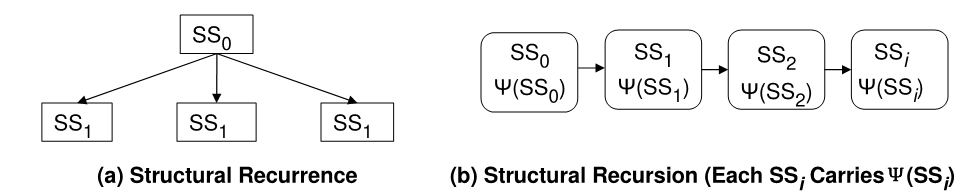
Fig. 16 Two fundamental organizational mechanisms in the unified recursive organization theory
In Fig. 16, panel (a) shows structural recurrence generating multiple recursive organizational units at the same hierarchical level, and panel (b) shows structural recursion progressively forming higher-level recursive organizational units; in both panels, each recursive organizational unit SSi carries a unique organizational information potential Ψ(SSi) as an intrinsic attribute of its own state.
The process of recursive holographic unfolding is shown in Fig. 16. Structural recurrence continually extends recursive organizational units at the same level, as in the repeated formation SS0 → SS1. Structural recursion continually forms higher-level recursive organizational units, as in SS0 → SS1 → SS2 → … → SSi. Throughout this process, each recursive organizational unit continually carries its own informational attribute; the two form new organizational levels in step, rather than evolving independently and subsequently being brought into correspondence.
It should be noted that the formation of a new recursive organizational unit does not mean that the living system is continually generating new underlying information. On the contrary, as unified recursive organization proceeds, the same unified information continually acquires new organizational realizations, progressively forming new organizational structure, new organizational function, and new organizational relationships. The continual increase in biological complexity is not the result of a continual increase in underlying information, but the result of unified information continually unfolding and being realized.
This paper defines this layer-by-layer realization of unified information throughout continuous recursive organization as recursive holographic unfolding. Here, Recursive indicates that the unfolding of information always follows the regularity of unified recursive organization; Holographic indicates that unified information continually maintains a continuous connection between whole and part; and Unfolding indicates that unified information continually acquires new organizational realizations, rather than continually generating new underlying information.
The process of 3D printing offers an intuitive analogy. Once the printing program is fixed, the printing process as a whole does not continually generate new programs, but rather realizes the same program, step by step, into a complete structure through material deposition. As printing proceeds, the structure becomes increasingly complex, while the underlying program remains unchanged. The unfolding of information within unified recursive organization is analogous: unified information remains continuous throughout, while recursive organization continually realizes it as new organizational structure, organizational function, and organizational relationships. The continual increase in biological complexity arises from the continual unfolding of unified information, not from a continual increase in underlying information.
Recursive holographic unfolding is not a process independent of the Unified Recursive Organization Theory, but the natural manifestation, in the process of living organizational formation, of Ψ(SS) as an intrinsic information attribute of SS, as established in Equation (10).